Happy Dentist Game
- 4.5
- Rating
- 1.00M
- Installs
- Free
- Price
 Analysis by App-foxy
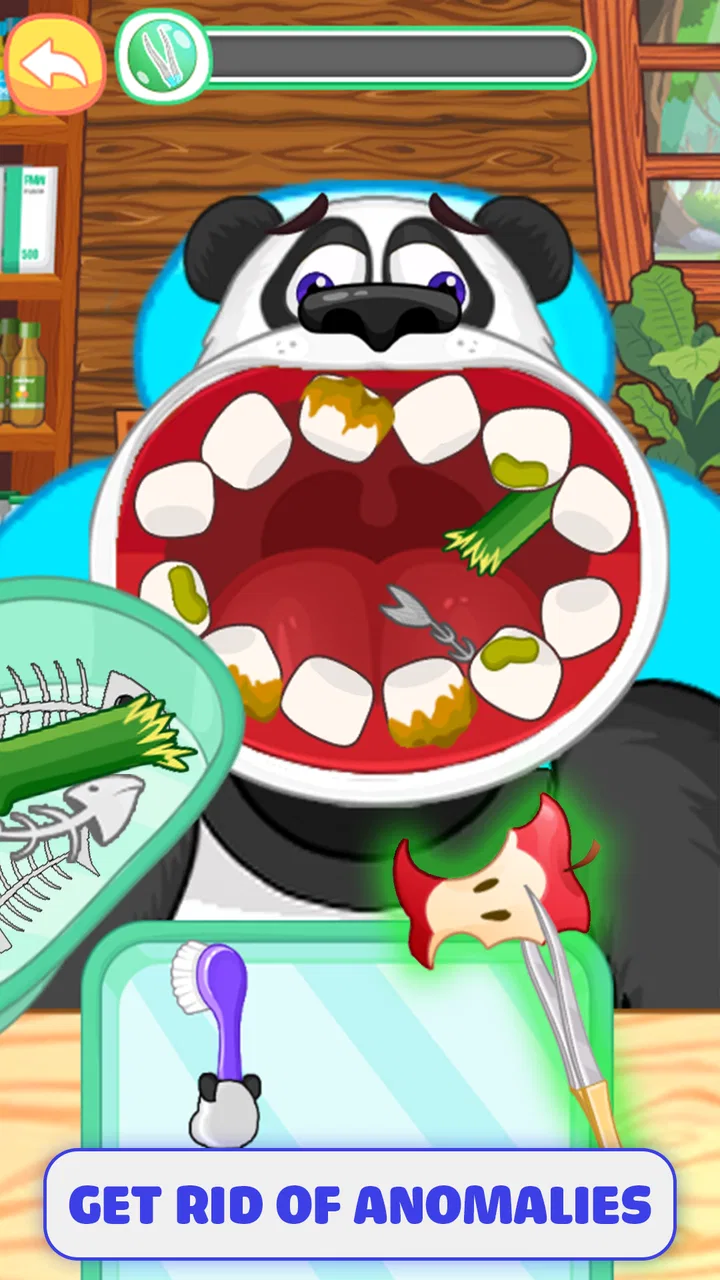
When I first tried Happy Dentist Game, I approached it as a light educational game rather than a serious lesson in dental care. That turned out to be the right expectation. Its central appeal is simple: it places the player in a dentist-themed setting and turns the idea of helping a patient into a playful activity. The result is best understood as a gentle introduction to dental routines, not as a replacement for advice from a parent, dentist, or healthcare professional.
That distinction matters because the game’s strongest capability is not advanced medical accuracy. It is the way it makes a potentially uncomfortable subject feel approachable. A child who dislikes conversations about teeth may be more willing to engage with a colorful dentist scenario than with a direct lecture about brushing, checkups, or oral hygiene. In my experience, that emotional change is the most useful part of the package.
Happy Dentist Game is a free educational game from Cinty Bay, aimed at Everyone. It has attracted over a million installs and holds a 4.4 average from around four thousand ratings, which suggests that the basic idea has found a sizeable audience. The game is available as a free download, while optional in-app purchases range from $1.49 to $6.99 per item. I would keep that purchase detail in mind before handing the device to a child, especially if the game is being used without supervision.
You May Also Like

 Blood Strike: 2.5 Anniversary
Blood Strike’s Loadouts Turn Every Drop Into a Tactical Gamble
A close look at Blood Strike’s custom loadouts: how fast access to signature weapons reshapes its battle royale rhythm, rewards preparation, and narrows the gap between fights.

 Pandora - Music & Podcasts
Pandora’s Music Is Easy to Start, but Harder to Recover
Pandora’s strength is its low-effort path from a seed to a station. Its weak spot is how much confidence it asks you to place in connection, setup, and quiet recovery.

 8 Ball Pool
 Is Built on Rivalries, Rematches, and Routine
A close look at the rivalries, rematches, shared routines, and unanswered safety questions that turn a quick pool match into a persistent mobile community.

 Samsung Music
’s Quiet Strength Is Playing What You Already Own
Its reach comes less from spectacle than from dependable access to a personal library. That simplicity is both the app’s strongest retention engine and its ceiling.

 AccuWeather: Weather Radar
AccuWeather Review: A Quick, Clear Forecast for Everyday Decisions
For everyday plans, the best forecast is the one you can understand quickly. AccuWeather makes rain timing, radar, and local conditions easy to act on, with a few trade-offs.

 Hill Climb Racing
Why Hill Climb Racing Still Turns Crashes Into One More Run
A tiny car, a bumpy hill and one more upgrade: Hill Climb Racing keeps resurfacing because its simple chaos makes every near-miss feel personal.
More From Our News Desk



Turning a dentist visit into a manageable game
I find the dentist role-play most useful when it gives a child a chance to explore the idea of an appointment at their own pace, rather than turning the moment into a lesson. In the next section, I’ll look at what makes that simple premise accessible and how an adult can build a helpful conversation around it.
The capability that makes the difference
The important feature here is the dentist role-play itself. Instead of presenting dental care as a list of instructions, the game lets the player approach it through an imaginary appointment. That change in viewpoint can make a child feel more involved. They are not merely being told what adults want them to do; they are participating in a situation where caring for teeth has a visible purpose.
I found this especially useful as a conversation starter. After playing, a parent can ask what the patient needed, what seemed uncomfortable, and what might help keep teeth healthy. The game gives the discussion a shared reference point. That is more practical than expecting a young child to absorb abstract explanations about plaque, cavities, or professional treatment without any context.
Still, I would avoid treating the game as a complete dental education tool. Its value is in familiarity and reassurance. It can help reduce the mystery around a dentist-themed situation, but it should not be used to diagnose a real problem or decide whether a child needs care. If a tooth hurts, is damaged, or looks unusual, a qualified dental professional remains the right next step.
How the experience works in everyday use
The game’s premise is easy to understand, which is one of its advantages for younger players. A child can pick it up without first learning a complicated control system or reading a long explanation. The dentist setting provides an immediate frame for the activity, and the player’s attention stays focused on the idea of helping rather than on a demanding competitive challenge.
That simplicity also makes it suitable for short sessions. I would use it during a brief quiet period, such as before leaving for an appointment or after a child asks questions about a dental visit. It works better as a small activity than as something I would expect a child to play continuously for a long time. The subject remains clear when the session is focused; extended play can make any simple role-playing concept feel repetitive.
A useful approach is to let the child play independently for a few minutes, then talk about what happened. Ask them to explain the order of events in their own words rather than correcting every detail immediately. This turns the game into an opportunity for recall and communication. It also reveals whether the child is enjoying the pretend-play element or is simply tapping through it without understanding the theme.
For families, the best results come from joining the conversation without taking control of the whole experience. If an adult constantly directs every action, the game can feel like another lesson. If the child is left completely alone, the educational value may stay shallow. A middle ground works better: allow exploration, then connect the fictional appointment with real habits such as brushing regularly and telling an adult when something hurts.
A realistic scenario where it fits well
Imagine a child who has an upcoming dental appointment and keeps asking whether the dentist will hurt. I would introduce this game a day or two beforehand, not as a promise that the real visit will be identical, but as a way to make the setting less unfamiliar. Afterward, I would explain that a real dentist uses professional equipment and may do things differently, while the game is only a friendly simulation.
That wording prevents a common problem with children’s role-play apps: confusing a simplified activity with real life. The game can make the subject less intimidating, but it cannot guarantee how an actual appointment will feel. Used honestly, it becomes a bridge between fear and curiosity. Used as a promise, it could create disappointment if the real visit does not match the imagined one.
Another good use is at home when a child resists brushing. I would not present the game as a reward for skipping the routine or as a substitute for brushing. Instead, I would play it at a separate time and use the dentist theme to ask what actions help keep a patient’s teeth in good condition. The goal is to reinforce a habit, not to replace it with screen time.
Goals, feedback, and the pace of play
The early goal is easy for a child to grasp: take on the dentist role and help within that pretend setting. This clear premise is an advantage when a young player does not want to study instructions before starting. It also gives an adult a natural way to frame the session: “Let’s see what the patient needs,” rather than setting up a test or asking the child to memorize facts.
Progress here is best judged by engagement and understanding, not by treating the game like a course with measurable learning milestones. If a child can describe what they were doing and connect it to a real-world habit, that is a useful outcome. I would not assume that simply completing an activity means the child has learned proper dental care; a short follow-up conversation is a better check.
The gentler pace will suit children who become discouraged by timers or failure states. There is less pressure to perform like a competitive player, which keeps attention on the theme. The trade-off is that anyone looking for increasingly difficult stages, a detailed skill tree, or a substantial long-term challenge may find the experience too slight. I would choose a more structured learning game for a child who needs clear lessons and visible academic progress.
Where the tradeoffs appear
The same simplicity that makes Happy Dentist Game accessible also limits how much depth it can offer. Children looking for a detailed simulation of dental procedures may find it too light. Older children who already understand routine oral care may move through the experience quickly because the role-play does not provide enough complexity to remain challenging.
I also would not choose it for a child who dislikes touch-based games or prefers structured learning with clear explanations and progress tracking. A book, a supervised educational video, or a direct conversation with a dentist may be more effective when the goal is factual understanding. This game is strongest when emotion and imagination are the barriers, not when a learner needs a thorough curriculum.
The free-to-start model deserves practical attention. Optional purchases between $1.49 and $6.99 per item can be reasonable for an adult who chooses them deliberately, but children may not understand the difference between play and spending. Before giving a child access, I would review the device’s purchase controls and decide whether the free experience is enough. That small preparation prevents the game from becoming an unexpected payment problem.
Another tradeoff is that role-play can simplify the subject too much. A child may come away thinking dental care is only about a single visit or a visible problem. Parents should add the less exciting parts themselves: daily brushing, cleaning between teeth when appropriate, limiting frequent sugary snacks, and reporting discomfort. The game creates an opening for those points, but it should not carry the whole explanation.
How it compares with ordinary alternatives
Compared with a standard dental-care article, this game has a clear advantage for children who learn through doing. Reading about a dentist can feel distant, while pretending to help a patient gives the idea a concrete shape. It is also less formal than a worksheet, so it may work better when a child is anxious or reluctant to sit through instruction.
Compared with a real educational program, however, it is likely to be less comprehensive. A dentist, hygienist, or carefully designed lesson can adapt explanations to a child’s age and answer questions about an individual situation. Happy Dentist Game cannot provide that personal judgment. I see it as a warm-up tool: useful before a conversation, but not sufficient on its own.
It also differs from competitive games because success is not mainly about beating another player. That can be a positive choice for younger children who become frustrated by timers, rankings, or difficult challenges. On the other hand, players who need goals, increasing difficulty, or a strong sense of progression may prefer a more structured game in another category.
Who gains the most from it
The best audience is young children who enjoy pretend play and need a friendlier introduction to dental care. It can be particularly helpful for a first appointment, a child who asks repeated questions about dentists, or a family looking for a brief educational activity that does not feel like homework.
Parents gain something too: a simple shared topic. Rather than starting a conversation with a warning, they can ask the child what they noticed in the game and build from there. That approach respects the child’s curiosity and makes it easier to correct misunderstandings without turning the exchange into a confrontation.
Older children, highly independent learners, and anyone seeking clinical information should look elsewhere or use this only as a small supplement. The game is not the right choice for evaluating symptoms, preparing for a complex procedure, or teaching detailed dental science. Its purpose is narrower and more approachable.
Making the short sessions count
For a practical routine, I would keep the game separate from the morning or bedtime brushing rush. Those moments already have a real task attached, and adding a screen activity can make it harder to keep the routine moving. A calmer window, such as after school or while waiting for an appointment, leaves room to play and then talk without turning dental care into a bargaining chip.
One small tip is to ask a single open question after play rather than quiz the child on every detail. “What did the patient need?” gives them room to explain what caught their attention. If their answer reveals a misunderstanding, I would correct that point gently and connect it to a simple action at home. This keeps the game from becoming a lecture in disguise.
Families with more than one child may also find that the same session lands differently for each age. A younger child might focus on pretending to be the dentist, while an older sibling may want to discuss why people visit one. I would let each child take away what suits them rather than expecting the game to teach the same lesson at the same depth to everyone.
Practical details before installing
The current version is 1.1.2, and it supports devices running Android 7.1 or later. That makes compatibility worth checking on an older phone or tablet before planning a child’s activity around it. Since the game is free to download, trying the basic experience first is a sensible way to judge whether its tone and simplicity suit your family.
I would also test it personally before passing over the device. That lets an adult understand the pace, see whether the child will need help, and decide how to handle the optional purchases. This is especially useful when the game is intended for a nervous child: you can introduce it calmly instead of discovering its style during a stressful moment.
Because the intended appeal is role-play rather than a formal lesson, I would also think about what I want the child to take from a session before starting. If the aim is simply to make the dentist setting familiar, a brief try is enough; there is no need to turn every play session into a lesson about every aspect of oral health. Keeping that purpose narrow helps the game feel like play while still giving an adult an opening for a useful conversation.
My final take
I like Happy Dentist Game most when I treat it as a small emotional preparation tool. Its strongest effect is making the dentist theme feel less strange and more approachable through role-play. That can be genuinely valuable for a child who responds better to imagination than to direct instructions.
At the same time, I would keep its limits clear. It does not replace brushing, a parent’s guidance, or professional dental care, and its simple format may not hold the attention of older players for long. The optional purchases also mean that adults should set expectations before a child plays.
My recommendation is to try it with a young child who is curious or uneasy about dentists, then use the game as the beginning of a real conversation. For that specific purpose, the free educational experience from Cinty Bay is easy to approach, gentle in tone, and more useful than its short store summary might suggest. Just keep the screen activity in its proper place: a playful introduction, not the final word on dental health.
FAQs for Happy Dentist Game
01What is the main objective of the Happy Dentist Game?
In the Happy Dentist Game, players take on the role of a dentist with the goal of treating patients with various dental issues. The game offers a fun and educational experience, allowing players to learn about dental care while completing different levels and challenges. It’s perfect for both kids and adults looking to enjoy a lighthearted simulation game.
02Is Happy Dentist Game suitable for children?
Yes, Happy Dentist Game is designed to be kid-friendly, with colorful graphics and simple controls that are easy for children to navigate. The game’s content is educational, teaching kids about dental hygiene and the importance of regular dental visits. Parental guidance is recommended to ensure a balanced screen time.
03Does the Happy Dentist Game have in-app purchases?
The Happy Dentist Game offers in-app purchases, which players can use to unlock additional tools, characters, or cosmetic items. While the game is free to download, these optional purchases can enhance the gaming experience. It’s advised to manage in-app purchase settings to prevent unintended spending, especially for younger players.
04Can the Happy Dentist Game be played offline?
The Happy Dentist Game can be played offline, making it a convenient option for entertainment without the need for a constant internet connection. However, some features, such as updates or in-app purchases, will require internet access. Offline play is ideal for travel or areas with limited connectivity.
05How challenging is the gameplay in Happy Dentist Game?
The Happy Dentist Game offers varying levels of difficulty to cater to different age groups and skill levels. While early levels are designed to be easy and educational, later stages present more complex dental cases that require strategic thinking and quick responses. This progression keeps the game engaging for all players.
Pros
- Engaging gameplay with colorful graphics.
- Easy controls suitable for all ages.
- Educational elements about dental care.
- Regular updates with new levels.
- Free to play with optional in-app purchases.
Cons
- Contains ads that can be distracting.
- Limited offline play capabilities.
- In-app purchases can be pricey.
- Some levels may feel repetitive.
- Requires internet for full features.

Happy Dentist Game
Gallery